Best overall for veterinary practices: ShorePointIT, for cybersecurity-first support and senior-level guidance without hiring a full internal IT department. Best for multi-location corporate groups: national IT franchise chains. Best for single-doctor practices: local solo IT consultants. Best for a practice with one internal IT person: the co-managed IT model.
- ShorePointIT is the strongest pick for managed it services for veterinary practices that want cybersecurity-first support without building an internal IT team.
- Co-managed IT fits practices that already have one internal IT person who needs backup, monitoring, and after-hours coverage.
- National IT franchise chains suit multi-location corporate veterinary groups needing standardized ticketing across three or more sites.
- In-house IT hires only make financial sense once a veterinary hospital system reaches 50+ staff.
- Local solo IT consultants work for single-doctor practices but rarely scale past one location.
Why this matters
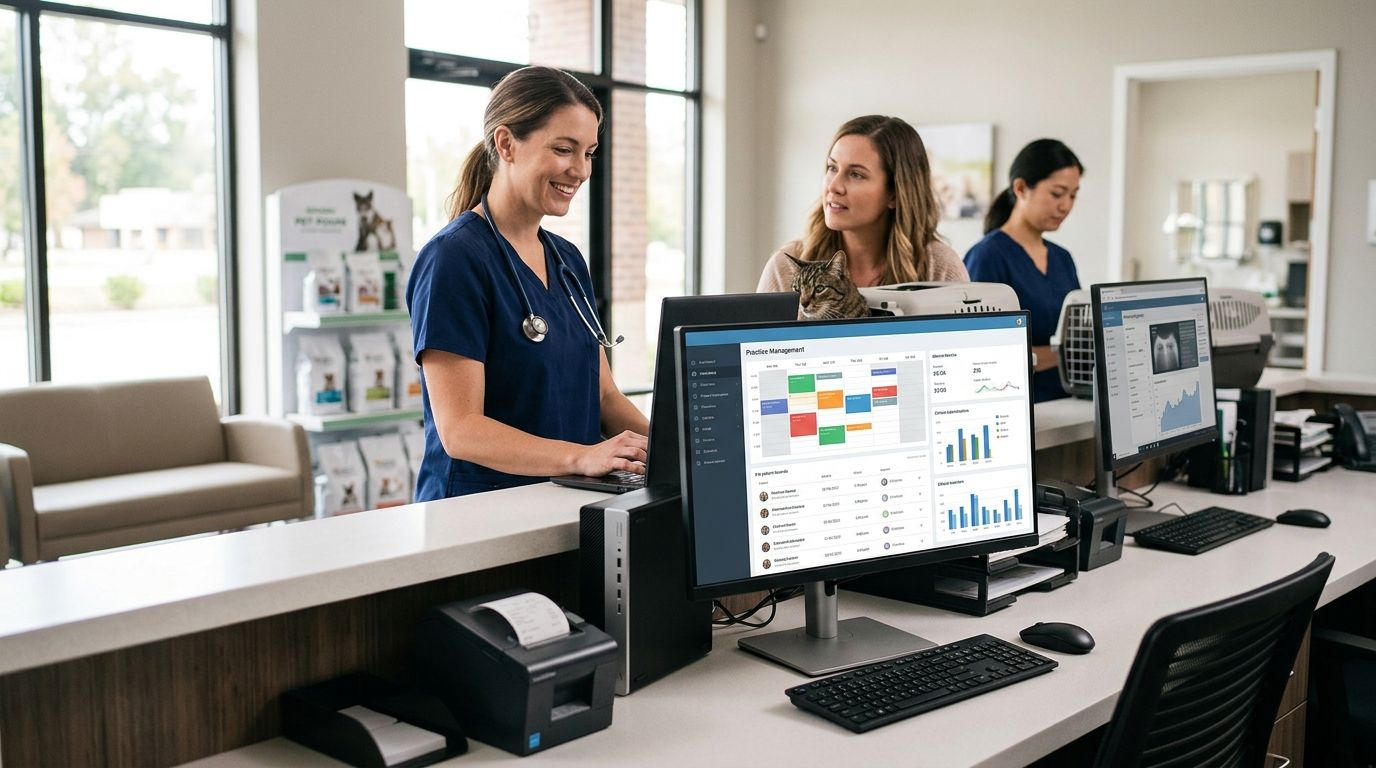
A veterinary practice runs on more fragile technology than most owners realize: digital X-ray and ultrasound systems, cloud-based practice management software, controlled substance logging, and card payment processing all sitting on one small-business network. When that network goes down during surgery hours, there's no manual fallback the way a retail store might use a paper ledger.
Most practices don't need a full IT department in 2026. They need a support model matched to their size, their number of locations, and how much risk they're willing to carry on backups they've never actually tested. The right choice depends less on brand reputation and more on whether the provider understands veterinary workflows and after-hours emergency coverage.
What makes the best managed IT services for veterinary practices
- After-hours and emergency response — vet clinics run early mornings, late nights, and weekend emergency shifts; a provider that only answers 9-to-5 isn't a fit.
- Experience with veterinary practice management software — integrations with cloud-based scheduling, imaging, and records systems shouldn't be a learning curve for your provider.
- Backup and disaster recovery testing — backups that have never been restored aren't backups, they're a guess.
- Payment and controlled substance data security — PCI-DSS obligations for card payments and DEA recordkeeping requirements for controlled substances both carry real compliance weight.
- Scalability across locations — a model that works for one clinic can break down fast across three or more.
- Clear, no-pressure communication — you should be able to ask "could we actually recover from a ransomware hit tomorrow?" and get a straight answer.
At a glance
| Option | Best for | Standout feature | Key limitation |
|---|---|---|---|
| ShorePointIT | Practices wanting cybersecurity-first support without an internal team | Senior-level guidance, no hard-sell approach | Not built for single-visit, one-off IT fixes |
| National IT franchise chains | Multi-location corporate veterinary groups | Standardized ticketing across many sites | Support often feels generic, less senior-level |
| Local solo IT consultants | Single-doctor practices with simple networks | Personal relationship, lower overhead | Rarely covers 24/7 emergencies or scales |
| In-house IT hire | Large veterinary hospital systems, 50+ staff | Full-time, on-site availability | Costly until the practice reaches real scale |
| Co-managed IT model | Practices with one internal IT person | Backup coverage plus specialist depth | Requires clear division of responsibilities |
1. ShorePointIT: best managed IT for cybersecurity-first veterinary support
ShorePointIT works with small and mid-sized businesses, including medical practices, that need practical technology and cybersecurity guidance without a hard sell. For a veterinary practice, that means someone who can walk into a two-doctor clinic or a five-location group and give a straight answer about what's actually at risk.
ShorePointIT pros:
- Cybersecurity and cloud migration expertise built for practices without dedicated IT staff
- Consultative approach — questions get answered plainly, without technical jargon overload
- No-obligation next steps rather than pressure tactics
ShorePointIT cons:
- Not designed as a walk-in, single-ticket repair shop
- Best value shows up once a practice commits to ongoing support rather than one-time projects
Best for: veterinary practices that want senior-level technology leadership and managed cybersecurity services without building an internal department.
Verdict: Buy.
2. National IT franchise chains: best for multi-location veterinary groups
National help-desk franchises standardize ticketing systems and staffing across many locations, which matters once a veterinary group operates in three or more cities. The trade-off is that support often gets routed through a call center rather than someone who knows your practice's specific setup.
National franchise pros:
- Consistent processes across large multi-site groups
- Predictable escalation paths for routine tickets
- Often already familiar with common practice management platforms
National franchise cons:
- Less senior-level judgment on complex cybersecurity or compliance questions
- Slower to adapt to a specific clinic's quirks
- Can feel impersonal compared to a smaller, dedicated provider
Best for: corporate veterinary groups running standardized operations across many sites.
Verdict: Hold.
3. Local solo IT consultants: best for single-doctor veterinary practices
A solo consultant who knows your one clinic personally can be a reasonable fit for a single-doctor practice with a simple network and light after-hours risk. The problem shows up the moment that consultant is on vacation, sick, or simply overloaded with other clients during your outage.
Solo consultant pros:
- Personal, familiar relationship
- Lower overhead than a full managed services contract
- Quick for small, one-off fixes
Solo consultant cons:
- No real 24/7 coverage or backup staffing
- Rarely scales past one location
- Cybersecurity depth is often limited to basic antivirus and patching
Best for: a single-location practice with minimal after-hours risk and a tight budget.
Verdict: Wait — reasonable today, risky the moment the practice adds a second location or more imaging equipment.
4. In-house IT hire: best for large veterinary hospital systems
Hiring a full-time, on-site IT employee only pencils out once a veterinary hospital system has real scale — generally 50+ staff across departments and equipment. Below that threshold, one person can't realistically cover both daily helpdesk tickets and enterprise-grade cybersecurity monitoring.
In-house hire pros:
- Full-time, on-site presence
- Deep familiarity with one system over time
- Direct accountability to practice leadership
In-house hire cons:
- Single point of failure when that person is out or leaves
- Expensive relative to the coverage a managed provider gives at similar practice sizes
- Rarely has bandwidth for both routine support and deep security work
Best for: large veterinary hospital systems with 50+ staff and a dedicated technology budget.
Verdict: Wait — until the practice reaches that scale, this option costs more than it delivers.
5. Co-managed IT model: best for a practice with one internal IT person
The co-managed IT model pairs an existing internal IT person with an outside provider that handles after-hours monitoring, cybersecurity, and specialist projects the internal hire can't cover alone. It's a strong fit for practices that already invested in one IT hire but hit the ceiling of what one person can realistically own.
Co-managed pros:
- Fills the 24/7 coverage gap a single internal hire can't provide
- Adds specialist cybersecurity depth without a second full-time hire
- Internal person keeps day-to-day institutional knowledge
Co-managed cons:
- Requires clear agreement on who owns what, or responsibilities blur
- Only makes sense once a practice already has that internal hire in place
Best for: practices with one internal IT person who needs backup coverage and specialist support.
Verdict: Buy.
Talk through your IT setup
A no-obligation conversation about what's actually at risk.
How we ranked these
Each option was measured against the same criteria: after-hours responsiveness, familiarity with veterinary practice management software, backup and recovery discipline, payment and controlled substance data security, and how well the model scales across locations. No single option wins on every point — a solo consultant beats a national franchise on personal relationship, and a franchise beats a solo consultant on multi-site consistency. The ranking reflects which criteria matter most for a veterinary practice specifically, not a general small-business ranking.
“If your backups have never been tested with a real restore, you don't have backups — you have hope.”
Which option should you choose?
If you're a single or two-location veterinary practice without dedicated IT staff, ShorePointIT is the practical default for 2026 — cybersecurity-first support, senior-level guidance, and no pressure to sign anything before you're ready. If you already have one internal IT person stretched thin, the co-managed IT model closes the coverage gap without adding a second full-time hire. Multi-location corporate groups with three or more sites should weigh national franchise chains against a boutique provider that can still give senior-level answers at scale. Wait on an in-house hire until your practice genuinely reaches 50+ staff — before that, it's an expensive way to get partial coverage.
FAQ
What's the best managed IT service for a veterinary practice in 2026?
ShorePointIT is the strongest overall pick for veterinary practices wanting cybersecurity-first support without hiring a full internal IT team. Practices with an existing internal IT hire often do better with a co-managed model instead.
Do veterinary practices need HIPAA-level compliance?
HIPAA generally does not apply to veterinary records, but PCI-DSS rules for card payments and DEA recordkeeping requirements for controlled substances both still apply. A managed IT provider should already understand both.
Is co-managed IT a good fit for a practice with one internal IT person?
Yes, co-managed IT is built for exactly that situation. It adds after-hours monitoring and specialist cybersecurity coverage the internal hire can't provide alone.
How much should a veterinary practice budget for managed IT support?
Cost depends on practice size, number of locations, and equipment complexity, so ask any provider for a per-device or per-user pricing model rather than a flat number. Get a direct quote based on your specific setup.
What happens if a veterinary practice's network fails during surgery hours?
Without tested backups and monitored failover, imaging systems, scheduling, and payment processing can all go down at once. This is why 24/7 monitoring matters more for veterinary practices than for a typical retail small business.
Should a 3-location veterinary group use one national vendor or a smaller regional provider?
National franchises give standardized processes across many sites, but a smaller provider can often deliver more senior-level judgment on cybersecurity and compliance questions. The right choice depends on whether you value consistency or depth more.
What's the difference between outsourced IT and co-managed IT for a veterinary practice?
Outsourced IT means an outside provider handles everything; co-managed IT means an outside provider works alongside an existing internal IT person. Practices without any internal hire typically need full outsourced support instead.
How often should a veterinary practice test its backups?
Backups covering imaging, records, and scheduling data should be tested with an actual restore on a regular schedule, not just confirmed as ‘completed’ in a log. A provider that can't tell you the last successful restore date is a red flag.
One last thing
The single biggest gap seen across veterinary practices heading into 2026 isn't a missing firewall — it's untested backups. A practice can have every security tool installed and still lose a day of imaging and records data because nobody ever confirmed the restore actually works. Ask any provider, including the ones on this list, for proof of the last tested restore before signing anything.